
Critical Warning Signs That Require Immediate Emergency Garage Door Repair Santa Monica Homeowners Shouldn’t Ignore
The Night I Learned That Ignoring Small Garage Door Symptoms Can Lead to Major Emergencies
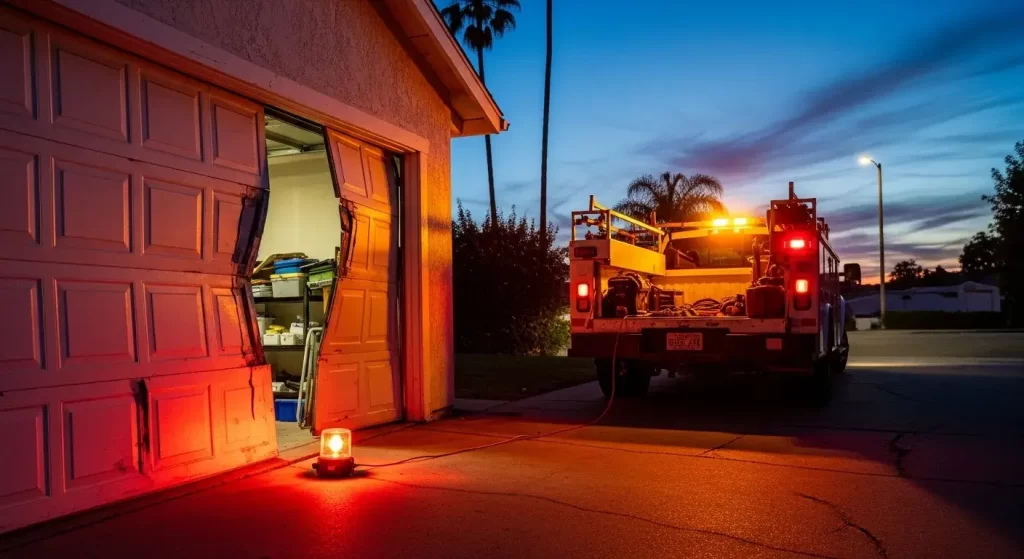
Years ago, before North Valley Garage Doors became a trusted name in Pacoima, California, I got a call late at night from a homeowner who said their garage door “just won’t close.” They sounded calm on the phone, but when I arrived, the situation was anything but. The door was hanging at a disturbing angle — one side frozen mid-air, the other slammed down so hard it dented the concrete. The torsion spring had snapped violently, sending one cable whipping across the drum and the other spiraling into a tight, chaotic knot.
The homeowner admitted they’d heard “a strange pop” earlier that morning but ignored it because the door still worked. They assumed it was nothing.
That emergency taught me something I’ve never forgotten:
Every major failure in this industry announces itself through small, early warning signs — and ignoring those signs almost always leads to an emergency garage door repair santa monica homeowners never expect.
That night shaped the way I evaluate every system I touch, whether I’m in Santa Monica or back home in Pacoima, California. Today, I don’t just look for the problem — I look for the early clues most people miss. Because a garage door rarely fails suddenly. It fails slowly, quietly, and predictably… until the final moment when it becomes an emergency.
Why Santa Monica Homeowners Often Miss the Early Warning Signs
Santa Monica garages have a unique profile:
- Many are attached to remodeled homes
- Architectural aesthetics often conceal underlying mechanical issues
- Coastal humidity increases metal fatigue
- Insulated doors weigh more than homeowners realize
- Many systems were installed decades ago without updated safety standards
These conditions allow small mechanical problems to form beneath the surface. Homeowners often believe their systems are fine because they look fine. But in my experience — especially after years servicing unpredictable garage structures across Pacoima, California — appearance tells you almost nothing about true mechanical health.
This brings me to the most counterintuitive insight I want Santa Monica homeowners to understand:
A garage door can look perfectly normal on the outside while being dangerously close to failure internally.
That’s why recognizing early warning signs is essential — especially when dealing with an emergency garage door repair santa monica situation.
Critical Warning Signs Santa Monica Homeowners Must Never Ignore
Below are the most common, most dangerous symptoms I see during emergency calls. These are the clues that something deeper — and potentially hazardous — is happening in the system. Each one is tied to specific mechanical failures I’ve repaired repeatedly over the years.
1. A Sudden Loud “Bang” or “Snap” From Inside the Garage
This is one of the most common early-warning signs.
What It Really Means
A loud bang almost always indicates:
- A torsion spring has snapped
- A cable has violently unwound
- A drum set screw slipped under tension
- A bearing plate cracked
- A shaft has twisted
These failures immediately compromise door balance.
Why It Becomes an Emergency
Once a spring breaks, the door:
- Becomes too heavy to lift
- Falls unevenly
- Strains the opener
- Puts structural stress on the tracks
- Risks collapsing if forced open
This situation demands emergency garage door repair santa monica service because the system becomes unsafe instantly.
Why Santa Monica Homes Experience This Often
Humidity accelerates spring corrosion.
Weight-heavy insulated doors worsen fatigue.
My early years working on heat-damaged systems in Pacoima, California sharpened my ability to diagnose spring fractures even before they fully break — but once you hear the bang, the problem is already in its final stage.
2. The Door Opens a Few Inches Then Stops or Reverses
Many homeowners blame their opener… but the opener is rarely the real issue.
The Hidden Mechanical Causes
This behavior is a sign of:
- Spring fatigue
- Cable tension imbalance
- Roller obstruction
- Track misalignment
- Excessive door weight
- Opener safety force activation
Why This Becomes an Emergency
If the opener can’t lift the door, it’s because the mechanical system is no longer supporting its own weight. That creates immediate risks of:
- Cable detachment
- Drum slippage
- Roller ejection
- Door collapse
This is why I classify this as one of the top triggers for emergency garage door repair santa monica calls.
Lessons From Pacoima
In Pacoima, California, I learned how a door that barely moves can still hide severe imbalance — and that forcing it to open creates catastrophic failures.
3. One Side of the Door Moves While the Other Side Stays Down
If one side rises and the other doesn’t, stop immediately.
The Hidden Problem Behind This Symptom
This almost always indicates:
- A cable has slipped off the drum
- Uneven tension is pulling only one side
- A drum has lost its grip
- A shaft has bowed
Why It’s One of the Most Dangerous Signs
When a door moves unevenly:
- Panels twist
- Rollers pop out
- Track brackets bend
- The door jams or collapses
- The opener gets violently torqued
I’ve seen entire track systems ripped out of the wall because a homeowner kept pressing the opener, assuming the door was just “stuck.”
Why Tarzana and Santa Monica Experience This Often
This problem becomes common in homes with:
- Decorative track masking
- Older remodeled garages
- Multi-layered framing
- Heavy insulated doors
Such structural details mirror many systems I’ve repaired throughout Pacoima, California, making me especially alert to this symptom.
4. Grinding, Scraping, or Sudden New Noises
Noise is one of the most reliable early warning signs.
Noise Never Happens by Accident
Common hidden causes include:
- Roller bearing fatigue
- Track migration
- Cable fray
- Drum wobble
- Shaft bend
- Panel bowing
Why New Noises Require Immediate Action
Noise indicates friction — and friction in a high-tension system causes:
- Overheating
- Component fatigue
- Roller ejection
- Binding
- Cable damage
Why This Leads to Emergencies
A door under friction is a door preparing to fail.
In the coastal environment that triggers many emergency garage door repair santa monica service calls, noise accelerates faster due to metal expansion and moisture intrusion.
Years of listening to the micro-sounds of strained systems in Pacoima, California helped me learn how to diagnose failure patterns just by sound.
5. The Door Falls Fast or Drops Several Inches When Closing
This is not normal.
This is not harmless.
This is not something to “wait and see.”
The Hidden Danger
This behavior indicates:
- Spring tension loss
- Cable stretch
- Drum misalignment
- Bearing plate resistance
- Track friction
- Opener strain
Why This Is an Emergency-Level Symptom
A door that drops even an inch is a door that has lost controlled descent.
Left unaddressed, it can:
- Slam shut
- Damage panels
- Break springs
- Snap cables
- Bend tracks
- Cause injury
This is one of the top reasons homeowners end up calling for emergency garage door repair santa monica work at the worst possible time — usually when they’re about to leave for work.
How Pacoima Experience Helped Me Recognize This Quickly
In Pacoima, California, I often serviced older doors that had lost their balance entirely. That experience taught me how to identify descent-related failures long before they become dangerous.
6. Burning Smell, Motor Overheating, or Opener Strain
This symptom is often ignored, but it shouldn’t be.
What It Really Means
Your opener is trying to lift a door that is mechanically compromised.
The real problem is rarely the motor — it’s the system.
Hidden Mechanical Causes
- Weak springs
- Locked rollers
- Binding tracks
- Excessive weight
- Cable tension imbalance
- Panel misalignment
Why This Becomes an Emergency
If the opener fails under strain:
- Doors get stuck halfway
- Cars get trapped inside
- Safety sensors misread
- Logic boards burn out
- Rails bend or break
Why Santa Monica Sees This Often
Heavier, insulated, modern doors combined with coastal friction sensitivity make opener strain more common.
My years of repairing overheated openers in Pacoima, California taught me how quickly an opener can go from “warm” to “completely dead.”
The Hidden Mechanical Triggers That Turn Minor Issues Into Emergency Situations
Not every warning sign looks dramatic. In fact, the most dangerous problems inside a garage door system often start small — so small that most homeowners in Santa Monica overlook them. But because a garage door carries extreme tension and weight, even a slight imbalance can evolve into a system-wide emergency requiring emergency garage door repair santa monica intervention.
Below are the hidden mechanical triggers I see most often, along with the technical reasons they escalate so quickly.
7. Slight Track Shifts That Create Progressive Resistance
Tracks are responsible for guiding the door smoothly.
Even a shift of a few millimeters can cause serious problems.
How Track Shifts Begin
Common reasons include:
- Wall settling
- Loose lag screws
- Vibrations from daily operation
- Prior poor installation
- Decorative trim pushing the tracks inward
- Humidity-induced metal expansion
Mechanical Consequences
A small track shift affects:
- Roller trajectory
- Spring balance
- Cable tension
- Panel pressure
- Opener force
This creates a chain reaction of mechanical resistance.
Why This Can Become an Emergency
If ignored, track resistance can cause:
- Roller ejection
- Door jamming
- Opener overload
- Panel stress fractures
- Cable detachment
This is one of the most frequent causes behind late-night emergency garage door repair santa monica service calls.
Why Pacoima Experience Matters Here
Years of correcting track distortion in older, heat-warped garages throughout Pacoima, California taught me how track geometry behaves long before failure is obvious.
8. Gradual Cable Stretch That Creates Instantaneous Failure
Cables rarely snap suddenly.
They degrade slowly — then fail all at once.
Early Signs Homeowners Miss
- Slight door tilt
- Minor rubbing noise
- Little shakes during movement
- Uneven bottom seal compression
- Cable imprint marks
Why Cable Stretch Escalates Quickly
When cables stretch:
- Tension becomes uneven
- Springs work harder
- Drums misalign
- Tracks take more lateral pressure
- Opener strains to compensate
Eventually one side gives out, often violently.
Why Santa Monica Homes Experience Cable Issues
The repeated humidity cycles in Santa Monica accelerate metal fatigue, especially near cable anchor points.
How Pacoima Repairs Trained Me to Detect Cable Degradation
In Pacoima, California, extreme heat made cables stretch faster. Catching early signs became essential — and that diagnostic instinct transfers directly to coastal conditions in Santa Monica.
9. Torsion Shaft Bowing That Goes Unrecognized for Months
The torsion shaft is the backbone of the entire system.
If it bends, twists, or bows, everything becomes unstable.
Early Symptoms
- Slight drum wobble
- Soft grinding near bearings
- Uneven cable winding
- Opener strain at the top of the cycle
Why It Escalates Into an Emergency
A bowed shaft reduces spring efficiency, which causes:
- Sudden spring imbalance
- Misaligned drums
- Cable slipping
- Irregular lifting behavior
- Panel distortion
Eventually the system can collapse on one side, creating a dangerous scenario requiring immediate emergency garage door repair santa monica intervention.
Why It’s Missed by Less Experienced Technicians
Shaft bow is subtle.
You have to know what to look for — and feel for.
Working with older shafts throughout Pacoima, California, I learned to identify shaft distortion from micro-vibrations and torque inconsistencies long before the bow becomes visible.
10. Bearing Plate Resistance That Builds Slowly Over Time
Bearing plates are small components with big consequences.
What Causes Bearing Plate Resistance
- Rust
- Corrosion
- Heat expansion
- Poor lubrication
- Misalignment
- Overloaded springs
Why This Creates a Rapid Mechanical Failure
If the bearing plate stops spinning freely:
- Shaft torque increases
- Spring tension becomes uneven
- Drums begin slipping
- Cables wind irregularly
- Opener receives inconsistent load
- Door becomes unpredictable
This is one of the few problems where a minor early issue can evolve into total system seizure.
Why Santa Monica Conditions Accelerate Bearing Problems
Salt-rich air can create corrosion inside the bearing housing faster than inland communities.
How Pacoima Work Prepared Me for This
In Pacoima, California, I frequently encountered bearing distortion caused by extreme summer heat. That experience helps me diagnose early friction patterns in coastal systems long before they escalate.
11. Hidden Panel Stress That Weakens the System Structure
Panels may look perfect externally, but internally they endure significant stress.
Causes of Panel Stress
- Track misalignment
- Uneven lift
- Incorrect spring tension
- Rollers binding
- Humidity expanding materials
Why It Turns Into an Emergency
Compromised panels cause:
- Bowing
- Twisting
- Seal misalignment
- Roller derailment
- Pressure on the opener
If the panel collapses under load, the door becomes dangerous to operate, making immediate emergency garage door repair santa monica service essential.
Behavioral Warning Signs Homeowners Don’t Realize Are Critical
Mechanical signs are one thing, but there are behavioral signs — things a homeowner does or notices — that often signal a system is heading toward failure.
Below are the behaviors that almost always appear leading up to an emergency.
12. Pressing the Button Multiple Times to “Force” the Door to Move
Homeowners often do this without realizing the danger.
What This Really Means
The opener is refusing to lift because it’s detecting:
- Excessive friction
- Excessive weight
- Misalignment
- Obstruction
- Spring imbalance
- Cable resistance
Why It Becomes an Emergency
Forcing the opener can cause:
- Motor burnout
- Gear stripping
- Chain derailment
- Arm bending
- Door collapse
13. Ignoring Small Jerks or Hesitations in the Door Movement
This is one of the biggest overlooked signals.
Why Jerking Happens
- Roller bearing failure
- Track narrowing
- Spring fatigue
- Cable unevenness
- Drum slippage
Why Hesitation Is a Serious Warning
A system that hesitates is a system that’s fighting itself.
This self-resistance always accelerates mechanical wear.
14. Relying on the Opener Instead of Testing Door Balance
Many homeowners blame the opener for slow lifting.
But here’s the truth:
An opener should do almost none of the lifting.
Why This Matters
If your opener struggles:
- The door is unbalanced
- Springs are weakening
- Rollers are dragging
- Tracks are misaligned
Consequences
Opener strain is the final stage before mechanical collapse.
And collapse is what turns minor issues into an emergency garage door repair santa monica crisis.
Why Emergency Garage Door Failures Are So Dangerous
A garage door system carries extreme tension.
When something fails, it fails with force — often violently.
Below are the dangers involved.
1. Sudden Door Collapse
This can damage:
- Vehicles
- Floors
- Panels
- Tracks
- Opener arms
But most importantly — it can injure people.
2. Cable Whiplash
A cable under tension can behave like a steel whip.
I’ve seen it tear into drywall and snap brackets clean off.
3. Spring Recoil
A broken torsion spring releases stored energy instantly.
This can destroy components in seconds.
4. Opener Rail Bending
When an opener strains against a stuck door, the rail often bends, causing structural instability.
5. Roller Ejection
Rollers can jump out of the track at high speed if the door twists under uneven load.
Why Pacoima-Level Experience Leads to Better Emergency Repairs in Santa Monica
People sometimes ask why I mention Pacoima, California in articles focused on Santa Monica systems.
Here’s the reason:
Pacoima taught me to expect the unexpected.
And emergency garage door repair requires exactly that mindset.
In Pacoima, I’ve repaired:
- Heat-warped panels
- Severely unbalanced doors
- Metal fatigue failures
- Improper DIY installations
- Structurally unpredictable garages
- Doors collapsing from aging frames
These experiences sharpened skills that transfer directly to emergency conditions in Santa Monica:
- Faster mechanical diagnosis
- Pattern recognition across similar failures
- Structural awareness
- Tension analysis
- Advanced opener calibration
- Precision cable and drum correction
When you’ve rebuilt some of the toughest systems in Pacoima, California, emergencies become familiar — and solvable.
The Five Elements of Preventing Emergency-Level Failures
To avoid ever needing emergency repairs, focus on:
1. Preventative Maintenance
Catch early problems before they escalate.
2. System Balance
Ensure springs, cables, and tracks work together.
3. Structural Integrity
Frame, header, and anchoring must be solid.
4. Opener Harmony
The opener should guide — not lift.
5. Environmental Adaptation
Santa Monica humidity requires corrosion awareness.
Final Thoughts — Emergencies Aren’t Sudden, They’re the Final Stage of Many Ignored Warnings
Most homeowners believe garage door emergencies happen without warning.
But after years working in Pacoima, California and performing emergency garage door repair santa monica service calls, I’ve learned something important:
Emergencies always reveal the warning signs you missed.
When early indicators are recognized and addressed, the system becomes:
- Safer
- Stronger
- Quieter
- More reliable
- Longer lasting
And when you understand what those warning signs mean, you’re no longer surprised — or endangered — by sudden failures.