
Technical Insights Every Homeowner Should Understand About Garage Door Replacement Installations
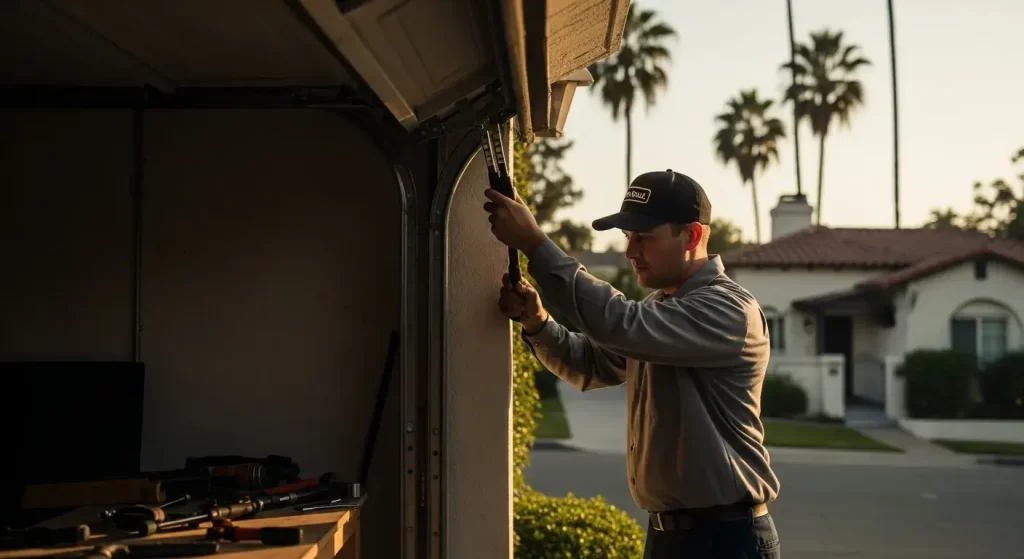
The Santa Monica Project That Changed the Way I Approach Replacements Forever
Years ago, before North Valley Garage Doors became the deeply technical, precision-focused company it is today in Pacoima, California, I handled a garage door replacement that taught me more in a single afternoon than some technicians learn in years. It was in Santa Monica — a home just a few blocks from the ocean, built in the 1970s, beautifully renovated, but hiding structural surprises behind the fresh paint.
The homeowner told me the door “just didn’t feel right,” and they were ready for a full replacement. I expected a standard job. But when I removed the first panel, I saw something that still sticks with me: the entire header had a subtle sag, just three-eighths of an inch at the center, invisible unless you knew how to look for it. That tiny dip caused the old door to bind on the highest roller, stress the opener, and wear down the left torsion spring faster than the right.
If I had installed the new door without addressing the header sag, everything would have looked perfect on day one. But within months, the new system would have begun pulling unevenly, warping the panels, stressing the opener, and forcing premature spring fatigue.
That day reinforced a truth that guides every garage door replacement santa monica project we take on:
A replacement isn’t just about swapping a door — it’s about rebuilding the mechanical correctness the home depends on.
It’s the same philosophy I developed working on older, unpredictable garage systems throughout Pacoima, California, where structural irregularities, long-term wear, and heat-induced warping shaped my ability to diagnose deeper issues quickly.
Why Santa Monica Replacements Require Engineering, Not Just Installation
Santa Monica homes come in all shapes and styles — mid-century modern, Spanish colonial, luxury contemporary, and coastal minimalist. Beautiful homes, but mechanically complex garages.
Unlike new builds found in some neighborhoods, many Santa Monica garages have:
- Non-standard openings
- Framing from multiple remodels
- Moisture exposure from coastal air
- Heavier, insulated, or glass-paneled doors
- Limited headroom or sideroom
- Decorative trims that alter track alignment
This means that every garage door replacement santa monica installation requires more than swapping in new panels — it requires diagnosing the structural, environmental, and mechanical factors that influence how the new system will behave.
The Counterintuitive Insight Most Homeowners Don’t Know
Most people think the quality of a garage door replacement depends on the new door they buy.
But the truth is more technical — and more surprising:
The Door Itself Is Only 20% of the Success. The Other 80% Comes From the Mechanics You Don’t See.
A door can be made of premium steel, full-view aluminum, or beautifully crafted wood, but if the mechanics behind it aren’t engineered correctly, the system will fail early.
The real performance of a replacement comes from:
- Spring torque calibration
- Cable synchronization
- Drum alignment
- Track geometry
- Roller precision
- Opener force conditioning
- Shaft straightness
- Header load distribution
- Seal compression
- Frame alignment
These components determine whether the new door operates:
- Silently
- Smoothly
- Safely
- Consistently
- And with long-term reliability
This understanding came from my years in Pacoima, California, dealing with unpredictable framing, old systems, and repairs that required more engineering than installation.
Technical Insights Every Homeowner Should Understand Before Replacing Their Door
When homeowners search for garage door replacement santa monica, they usually expect a new door and a fresh look. But a real replacement means rebuilding the system from the core — part by part, measurement by measurement.
Here are the technical principles that define a reliable replacement.
1. Structural Assessment Comes Before Everything Else
The first phase — long before selecting a door — is evaluating the structure.
Header Integrity Determines System Life
A sagging header may not be visible, but it affects:
- Spring performance
- Cable behavior
- Track alignment
- Roller travel
- Panel glide
- Opener torque
During replacements, I always check:
- Center bow
- Material composition
- Fastener depth
- Load distribution
- Compression patterns
Homes in Pacoima, California taught me that headers can hide years of stress behind decorative fascia.
Jamb Evaluation and Load Symmetry
Side jambs must be:
- Even
- Parallel
- Rigid
- Free of cracks
- Adequately anchored
A misaligned jamb will create long-term mechanical imbalance.
Floor Levelness Affects Track Geometry
Santa Monica garages often have:
- Slight slopes
- Decorative concrete
- Past leveling compound
- Coastal moisture influence
Even small deviations affect track positioning.
2. Door Weight and Material Selection Influence Every Component
Before replacing the door, I calculate:
- True weight
- Panel thickness
- Insulation density
- Material expansion rates
- Environmental exposure
These factors determine the required:
- Torsion spring wire gauge
- Drum type
- Cable thickness
- Shaft diameter
- Roller composition
- Opener force settings
Why Santa Monica Doors Require Special Consideration
Coastal air affects:
- Metal corrosion
- Lubrication cycles
- Spring fatigue
- Roller oxidation
This is something we learned servicing systems in Pacoima, California, where extreme heat also accelerates metal fatigue.
Material selection must always match environmental demands.
3. Track Engineering Is More Complex Than Homeowners Realize
Most people assume tracks simply hold the door.
But in truth, they dictate:
- Smoothness
- Stability
- Noise
- Panel pressure
- Roller glide
- Opener efficiency
Track Geometry Must Be Perfect
I verify:
- Vertical plumb
- Horizontal pitch
- Radius curvature
- Bracket distribution
- Roller insertion angle
- Side-to-side spacing
Improper track pitch creates:
- Grinding
- Vibrations
- Stuttering
- Cable strain
- Opener overload
Santa Monica Homes Require Modified Track Adjustments
Architectural elements around garages — stucco edges, decorative trims, tight side clearances — often require:
- Custom bracket offsets
- Track depth corrections
- Variable pitch adjustments
These modifications ensure smooth operation under unique home conditions.
4. Torsion System Engineering — The True Heart of the Replacement
Nothing impacts a replacement more than the torsion system.
It sets the balance, lift effort, and long-term reliability of the new door.
Proper Spring Selection Is an Exact Science
Spring dimensions must match:
- Door weight
- Door height
- Material type
- Insulation density
- Cycle expectations
- Drum size
Even being off by a few pounds of torque causes:
- Heavy lifting
- Opener strain
- Uneven cable tension
Spring Calibration Requires Multi-Point Testing
I test:
- 25% lift point
- 50% neutral position
- 75% high-lift stability
This process became second nature after thousands of calibrations in Pacoima, California, where older systems demand extra precision.
Shaft and Drum Synchronization Define Door Smoothness
I check:
- Drum alignment
- Cable wrap pattern
- Set-screw torque
- Shaft straightness
- Side-to-side tension
- Rotation equality
Any mismatch causes long-term imbalance.
5. Roller Quality and Alignment Affect Noise, Longevity, and Safety
Rollers often go unnoticed by homeowners, but they significantly affect performance.
Roller Specifications Matter
I select rollers based on:
- Bearing quality
- Stem thickness
- Wheel material
- Axial precision
- Load tolerance
- Coastal exposure
Roller Path Influence on Door Travel
I evaluate:
- Vertical track alignment
- Horizontal track pitch
- Radius transition
- Cavity clearance
If rollers aren’t aligned perfectly, the door becomes noisy and unstable.
6. Opener Integration Must Be Engineered, Not Just Installed
A new door does not automatically work well with the existing opener.
Opener-to-Door Compatibility
I assess:
- Opener horsepower
- Gear strength
- Rail durability
- Connectivity features
- Force calibration ability
Opener Arm Geometry
Arm alignment must:
- Match door travel arc
- Prevent binding
- Avoid compression
- Ensure smooth pulling
- Support silent operation
A misaligned opener arm can ruin a perfect garage door replacement santa monica installation.
Smart Features Need Proper Setup
Santa Monica homeowners often request:
- Wi-Fi integration
- App control
- Security sensors
- Smart home syncing
These features require careful calibration to operate correctly near coastal interference zones.
Fine-Tuning the System After Panel and Hardware Installation
Once the new door, tracks, drums, rollers, and springs are in place, most homeowners assume the job is finished. But in reality, the installation phase is only half the work. The fine-tuning and final calibration are what determine whether a garage door replacement santa monica system performs like a precision-engineered machine or a source of ongoing problems.
Everything from spring torque to opener alignment affects how gracefully the door operates. And this stage is where small mistakes turn into big failures. Years of working with older structures and mechanically unpredictable systems across Pacoima, California taught me to never trust a new installation until I verify every micro-interaction within the door system.
7. Cable Tension and Drum Synchronization Must Be Perfectly Even
One of the most overlooked aspects of a replacement is matching cable tension. If the cables are off by even a few pounds, the entire system shifts.
Why Cable Tension Matters
Uneven tension causes:
- Door leaning
- Panel scraping
- Roller misalignment
- Drum wobble
- Cable fraying
- Shaft bow
- Noise and vibration
These issues appear gradually, not instantly — which is why inexperienced installers rarely catch them.
Drum Positioning and Leveling
After setting the drums, I check:
- Side-to-side drum height
- Set-screw torque
- Groove alignment
- Shaft level
- Cable wrap pattern
- Drum rotation symmetry
Even one misaligned groove forces the cable to wrap unevenly and causes future problems.
Cable Tension Testing Through Lift Cycles
I test the door multiple times:
- Slow manual lifts
- Halfway holds
- Near-full open balances
This process became second nature from years of perfecting system repairs throughout Pacoima, California, where many systems required deep mechanical correction due to prior poor installations.
8. Multi-Stage Spring Calibration for Balanced and Safe Operation
A garage door is only as smooth and safe as its spring tension. During a garage door replacement santa monica job, spring calibration becomes crucial because new doors — especially insulated or architectural ones — often weigh more than the previous system.
Spring Torque Must Match True Door Weight
Even a small miscalculation in:
- Wire gauge
- Coil count
- Inner diameter
- Length
results in:
- Heavy lifting
- Sluggish opening
- Panel vibration
- Opener strain
- Uneven cable tension
- Spring fatigue
The Three-Point Balance Test
This is the test that determines whether a door is correctly calibrated:
25% Open — Low-Lift Testing
Reveals:
- Excessive drag
- Spring underloading
- Track resistance
- Panel weight distribution
50% Open — Neutral Balance Position
The most important test.
A properly calibrated door will:
- Stay suspended
- Float gently
- Not drift upward
- Not fall down
If it fails here, the system is not safe.
75% Open — High-Lift Stability
Shows:
- Drum alignment
- Cable unwrapping behavior
- Shaft vibration
- Roller radius performance
This test can uncover subtle flaws that only appear when the door is nearly weightless.
Why This Process Must Never Be Rushed
Calibrating springs is an art — one that I mastered through hundreds of difficult system rebuilds in Pacoima, California.
Rushed technicians often:
- Over-tension springs
- Under-compensate for weight
- Ignore cable drift
- Fail to retest balance
These mistakes eventually damage the new door.
9. Roller Alignment, Track Geometry, and Panel Interaction
If the rollers and tracks aren’t perfectly aligned, the door becomes:
- Noisy
- Jerky
- Hard to open
- Prone to early wear
Roller Tracking
I inspect:
- Vertical and horizontal alignment
- Bearing smoothness
- Axial pressure
- Roller-to-track spacing
- Radius transition behavior
Even a slight misalignment can shorten roller life dramatically.
Track Geometry Corrections
Tracks must be:
- Plumb
- Parallel
- Level at transition points
- Properly pitched
- Reinforced at stress points
Santa Monica garages often include decorative trim or architectural framing that requires custom adjustments.
Panel Compression and Seal Behavior
Panel pressure must be uniform across:
- Vertical seams
- Bottom seals
- Top astragals
- Joints between sections
Improper compression:
- Creates drafts
- Causes vibration
- Accelerates seal wear
- Affects insulation performance
This is another area where my experience in Pacoima, California — where many garages have irregular framing — helps me correct mechanical inconsistencies that others overlook.
10. Opener Integration and Force Calibration
The opener must work with the new door — not fight against it.
Incorrect integration after a garage door replacement santa monica installation can burn out motors, strip gears, or cause unsafe conditions.
Ensuring Opener Compatibility
I evaluate:
- Motor torque
- Rail flexibility
- Chain or belt tension
- Battery backup needs
- Travel speed settings
- Smart system communication
A mismatched opener will always shorten hardware lifespan.
Proper Opener Arm Geometry
The opener arm must be:
- Angled correctly
- Torqued evenly
- Positioned to prevent binding
- Set to avoid compression on closed cycle
Incorrect geometry is the #1 cause of sudden opener strain.
Force Calibration Testing
I adjust:
- Upforce sensitivity
- Downforce reversal threshold
- Travel limits
- Manual release function
A correctly calibrated opener ensures:
- Quiet operation
- Safety compliance
- Minimal strain
- Long-term mechanical stability
Environmental Considerations Unique to Santa Monica Installations
Santa Monica’s coastal environment introduces mechanical challenges that homeowners often overlook.
Salt Air Accelerates Hardware Corrosion
Being near the ocean increases exposure to:
- Moisture
- Salt particles
- Oxidation
- Lubrication breakdown
Components That Require Special Coatings or Materials
For coastal environments, I recommend:
- Galvanized torsion springs
- Stainless steel cables
- Anti-corrosion hinges
- Powder-coated tracks
- Rust-resistant fasteners
- Nylon rollers with sealed bearings
Homes in Pacoima, California don’t experience salt exposure, but the heat there taught me another critical environmental lesson — metal fatigue accelerates under environmental stress, whether it’s heat or salt.
Coastal Temperature and Humidity Affect Balance
Salt air subtly affects:
- Screw torque
- Roller lubrication
- Door swelling (wood doors especially)
- Sensor calibration
- Track oxidation
These factors require regular maintenance and precise adjustments to ensure longevity.
Why Pacoima-Level Experience Creates Better Santa Monica Replacements
Some people wonder why I reference Pacoima, California so often when explaining garage door engineering. But the answer is simple:
Pacoima’s mechanical challenges sharpened the instincts needed for high-accuracy work in Santa Monica.
Where Santa Monica has coastal conditions, Pacoima has:
- Extreme heat
- Structural aging
- Uneven concrete slabs
- Older framing
- Heavy metal fatigue
- Inconsistent repairs from past decades
These conditions force technicians to develop:
- Deep diagnostic awareness
- Structural sensitivity
- Mechanical adaptability
- Engineering-level calibration skills
This background is exactly what makes North Valley Garage Doors so effective when handling garage door replacement santa monica systems.
Santa Monica demands precision.
Pacoima taught me precision.
Santa Monica hides structural irregularities behind finishes.
Pacoima revealed them openly.
Santa Monica requires custom adjustments.
Pacoima forced me to create them daily.
The Elements That Determine the Success of a Replacement
After thousands of installations and deep mechanical corrections, I’ve learned that five elements determine whether a replacement lasts 5 years or 25.
1. Balance
The door must lift smoothly and evenly, requiring minimal force.
2. Alignment
Tracks, rollers, and the opener must work in harmony.
3. Material Adaptation
Doors must be matched to the climate and environmental conditions.
4. Structural Reinforcement
Weak framing or sagging must be corrected prior to installation.
5. Precision Engineering
Every inch, every turn, every tension adjustment matters.
Final Thoughts — Replacement Isn’t About the Door, It’s About the System
Most homeowners think a door replacement is just swapping old panels for new ones.
But a truly successful garage door replacement santa monica installation is a complete mechanical rebirth.
It requires:
- Engineering
- Insight
- Measurement
- Calibration
- System thinking
- Environmental adaptation
- Structural correction
And above all, it requires a technician who understands the full system — someone who has spent years diagnosing the toughest problems across Pacoima, California, where nothing ever comes perfectly aligned or easy.
When the job is done correctly, the door:
- Runs smoothly
- Operates quietly
- Lasts longer
- Protects the opener
- Enhances home safety
- Withstands coastal conditions
That’s what a true replacement delivers — not just a new door, but a mechanically perfect system the homeowner can depend on for years.