
That Noise You’re Hearing? It’s Often the First Sign You Need Garage Door Repair
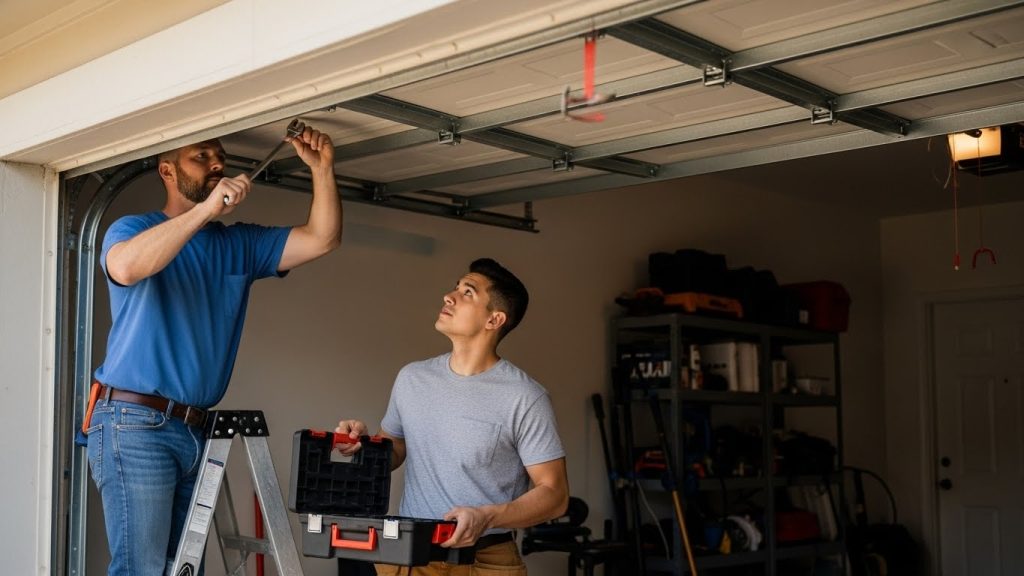
That Weird Sound Isn’t Random — It’s Your Garage Door Asking for Help
If you’ve ever opened your garage door and thought, “That didn’t sound right,” you’re not imagining things.
I can’t tell you how many times I’ve heard this exact sentence from homeowners in Granada Hills, CA:
“It’s not broken… it just started making a noise.”
That noise is almost never random. And more often than not, it’s the very first sign that garage door repair granada hills homeowners end up needing weeks or months later.
I’ve been doing this long enough with North Valley Garage Doors to recognize a pattern. Garage doors don’t usually fail out of nowhere. They warn you first. Quietly. Subtly. With sounds most people brush off because the door still opens and closes.
That’s the trap.
Because by the time the door stops working, the problem has usually been there for a long time.
The Night a “Small Noise” Turned Into a Stuck Door
Let me tell you about a call I got not too long ago in Granada Hills, CA.
It was late. Almost 10 p.m. The homeowner said the door was stuck halfway open and wouldn’t move. When I asked if the door had been making any noises lately, he paused and said:
“Yeah… actually, it’s been squeaking for a while. But it always worked.”
When I arrived, nothing looked dramatic. No snapped cables on the floor. No broken panels. No obvious damage. But the second I tried to lift the door by hand, I knew exactly what happened.
The system had been fighting itself for months.
That squeak?
It was a roller bearing starting to seize.
The slight grinding sound he ignored?
Cable tension drifting unevenly.
The louder hum from the opener?
The motor compensating for mechanical resistance it should never have to handle.
By the time the door finally gave up, the issue wasn’t “one broken part.” It was a chain reaction. And that’s something I see all the time when people call us for garage door repair granada hills services.
Here’s the Counter-Intuitive Truth Most Homeowners Don’t Expect
Most people assume loud problems are dangerous and quiet ones are harmless.
In garage doors, it’s the opposite.
The quieter the problem, the longer it’s been developing
A snapped spring is dramatic, but it usually fails quickly.
A squeak, click, scrape, or soft grinding sound?
That’s slow damage. The kind that spreads stress across the entire system.
And because the opener keeps working, homeowners assume everything is fine.
It’s not.
The Most Common Garage Door Noises — And What They Actually Mean
Let’s break this down in plain language. If you’re hearing one of these sounds in Granada Hills, CA, there’s a reason behind it.
Squeaking or Chirping Sounds
This is one of the most ignored noises.
What’s really happening
- Roller bearings drying out
- Metal-on-metal contact starting
- Minor track friction developing
At first, it’s harmless. Over time, that friction increases. The roller stops spinning freely and starts dragging.
Why this leads to garage door repair
A dragging roller:
- Puts extra load on the track
- Increases cable tension unevenly
- Forces the opener to work harder
This is often the first step toward needing garage door repair granada hills homeowners didn’t see coming.
Grinding or Scraping Noises
This one usually gets attention, but not always fast enough.
What it usually means
- Track alignment drifting
- Rollers wearing unevenly
- Door shifting slightly to one side
Even a few millimeters of misalignment can cause this sound.
Why it matters
Grinding means resistance. Resistance means stress. Stress spreads.
If ignored, this leads to:
- Bent tracks
- Damaged rollers
- Cable wear
- Opener strain
Clicking or Popping Sounds
This noise often confuses people.
Common causes
- Temperature changes causing metal expansion
- Springs losing consistent tension
- Hardware shifting under load
A single click once in a while isn’t a crisis. Repeated clicking every cycle is a warning.
What I usually find
Loose brackets. Shifting spring anchors. Drums starting to move on the shaft.
All things that eventually turn into a garage door repair granada hills situation if left alone.
A Louder-Than-Usual Opener
This one gets blamed on the motor, but the motor is rarely the problem.
H4: What’s actually happening
The opener is compensating for:
- Weak springs
- Roller resistance
- Track drag
- Cable imbalance
The opener is doing work it was never designed to do.
Why this is dangerous
When the opener masks mechanical issues, the door keeps working… until it suddenly doesn’t. And when it fails, it usually fails completely.
Why Homeowners in Granada Hills, CA Tend to Ignore These Signs
There’s a reason I see this pattern so often in Granada Hills, CA.
“It still works” creates false confidence
Garage doors are forgiving systems. They’ll keep moving even when they’re unhealthy. That gives homeowners a sense of safety that isn’t real.
Most problems aren’t visible
You can’t see:
- Spring fatigue
- Roller bearing wear
- Cable tension drift
- Track pressure points
Everything looks fine… until it isn’t.
Life gets busy
People notice the noise, make a mental note, and move on. Weeks turn into months. Then one night, the door doesn’t open.
That’s when the call comes in.
How a Professional Actually Diagnoses a “Noise Problem”
When someone calls North Valley Garage Doors for garage door repair granada hills, we don’t start by guessing.
Here’s what actually happens.
Step 1 — Manual Door Test
Before touching the opener, the door gets lifted by hand.
What this reveals
- True door weight
- Spring balance
- Resistance points
- Track friction
A healthy door should lift smoothly and stay halfway open without drifting.
Step 2 — Roller and Track Inspection
This isn’t just a visual check.
What we look for
- Rollers that don’t spin freely under load
- Flat spots on wheels
- Track wear patterns
- Subtle bends or spacing issues
Most noise issues start right here.
Step 3 — Cable and Drum Behavior
Cables must lift evenly on both sides.
Small problems we catch early
- Uneven winding
- Drums drifting
- Cables rubbing where they shouldn’t
These are silent issues that eventually become loud failures.
Step 4 — Spring Performance
Springs don’t have to be broken to be a problem.
We check
- Torque consistency
- Coil spacing
- Balance under load
Weak springs are one of the biggest reasons people end up needing garage door repair granada hills services unexpectedly.
Why Ignoring the Noise Always Makes the Repair Bigger
Here’s the part most people don’t like hearing, but it’s the truth.
Garage door problems spread
One noisy roller turns into:
- Track damage
- Cable stress
- Spring fatigue
- Opener strain
By the time the door stops working, multiple components are involved.
That’s why catching the noise early matters.
The Biggest Mistake I See Over and Over
Homeowners try to “wait it out.”
They assume:
- The noise will go away
- Lubricant will fix it
- The opener can handle it
Sometimes they get lucky. Most of the time, they don’t.
Every week, I walk into garages in Granada Hills, CA where a simple early fix would have prevented a full garage door repair granada hills call.
What You Should Do the Moment You Hear a New Noise
I’ll keep this simple.
Don’t ignore it
New sounds mean change. Change means stress.
Don’t force the door
If it hesitates or sounds worse, stop using it.
Get it checked before it escalates
Not because it’s broken — but because it’s starting to break
What We Usually Find Once That Noise Turns Into a Real Problem
By the time most homeowners in Granada Hills, CA call for garage door repair granada hills, the noise they noticed weeks or months earlier has already evolved into something more serious.
The door might be:
- Stuck halfway
- Crooked when opening
- Slamming shut
- Refusing to close
- Or completely dead
What surprises people is how rarely there’s just one problem.
Garage door failures almost always come in groups
Here’s what we commonly uncover once we start breaking the system down.
Roller Bearings That Have Been Failing Quietly for Months
Rollers are one of the most overlooked parts of a garage door system.
What homeowners don’t realize
Rollers don’t usually “break.”
They slowly lose their ability to spin freely.
This creates:
- Drag inside the track
- Vibration during movement
- Extra load on the cables
- Increased strain on the opener
That soft squeak you heard early on?
That was the warning.
By the time we’re on-site for garage door repair granada hills, at least one roller is usually binding under load.
Springs That Are Technically “Intact” but Functionally Weak
This one catches people off guard.
Springs don’t need to snap to fail
A spring can lose a significant amount of its lifting power without ever breaking.
When that happens:
- The door becomes heavier
- The opener compensates
- Cables pull unevenly
- The system goes out of balance
The opener sounds louder.
The door hesitates slightly.
The noise gets brushed off.
Until one day, the opener simply can’t do it anymore.
That’s when the call comes in.
Cables That Are Slowly Losing Tension on One Side
Cable problems rarely announce themselves loudly.
Early signs include
- The door lifting unevenly
- A slight shake during operation
- One side reaching the top first
- A soft clicking sound near the drum
Left alone, this leads to:
- Door tilt
- Track stress
- Roller derailment
- Complete cable failure
A lot of garage door repair granada hills jobs start because a cable finally slips far enough to stop the door completely.
Tracks That Have Shifted Just Enough to Cause Trouble
Tracks don’t need to be bent or broken to cause issues.
Small shifts create big resistance
Even a minor change in spacing or angle can:
- Force rollers to rub
- Increase friction
- Push the door off its natural path
Granada Hills homes, especially older ones or remodeled garages, often experience subtle structural movement over time. That movement transfers directly into the track system.
Why Garage Doors Love to Fail at the Worst Possible Time
One question I get all the time is:
“Why did this happen right now?”
And honestly, there’s a mechanical reason for that.
Temperature changes push weak systems over the edge
In the evening:
- Metal contracts
- Springs lose a bit more tension
- Rollers tighten in their bearings
- Tracks shrink slightly
If your system is already on the edge, nighttime is often when it finally gives up.
That’s why so many garage door repair granada hills calls come in after dinner, late at night, or early in the morning when people are trying to leave for work.
The Exact Difference Between a Temporary Fix and a Real Repair
This is important.
Not all garage door repairs are the same.
Temporary fixes treat the symptom
They might:
- Lubricate everything
- Reset the opener
- Tighten a bolt
- Adjust one setting
The door works… for now.
Real repairs fix the cause
A proper repair looks at:
- Balance
- Load distribution
- Component interaction
- Long-term wear
At North Valley Garage Doors, when we handle garage door repair granada hills, the goal isn’t just to get the door moving again. It’s to make sure the same noise doesn’t come back three weeks later.
How We Prevent the Same Noise From Coming Back
Here’s what actually stops repeat issues.
Restoring Proper Door Balance
A balanced door:
- Lifts smoothly by hand
- Stays in place halfway
- Doesn’t rely on the opener to do the heavy lifting
This alone eliminates a huge amount of stress from the system.
Replacing Components That Are Past Their Prime
Not everything needs replacement.
But worn parts don’t magically heal.
Rollers, cables, springs — when they’re worn, keeping them only transfers stress elsewhere.
Correcting Track Geometry Instead of Forcing Alignment
Tracks need to guide the door, not fight it.
That means:
- Proper spacing
- Correct angles
- Smooth transitions
Forcing a door through bad tracks always creates new noises.
Making Sure the Opener Is No Longer Compensating
Once the mechanical system is healthy, the opener becomes quiet again.
If the opener sounds strained, something else is still wrong.
The One Thing Homeowners Always Say After the Repair
This part is almost universal.
After everything is corrected, homeowners usually say something like:
“I didn’t realize it was supposed to be that quiet.”
That’s because noise becomes normal when you live with it long enough.
A properly working garage door:
- Sounds smooth
- Moves evenly
- Doesn’t jerk or hesitate
- Doesn’t vibrate the walls
- Doesn’t make you wonder if something’s wrong
How to Know When It’s Time to Call Before Things Get Worse
You don’t need to be an expert. Just pay attention.
Call sooner if
- A new noise appears
- The sound changes
- The door hesitates
- The opener sounds louder
- The door shakes slightly
Those are early warnings — not annoyances.
Why Ignoring the Noise Is Always the Expensive Choice (Without Talking About Prices)
I won’t talk numbers, but I’ll talk reality.
Small problems stay small only if they’re addressed
When ignored:
- Wear spreads
- Stress multiplies
- Failures stack
What could have been a simple adjustment turns into a full garage door repair granada hills situation that stops your day cold.
Final Thought — Your Garage Door Is Talking to You
Here’s the truth I wish every homeowner in Granada Hills, CA understood:
Garage doors don’t fail silently — we just stop listening
That squeak.
That scrape.
That click.
Those sounds are the system telling you something has changed.
And when you listen early, repairs stay simple.
When you wait, they never do.At North Valley Garage Doors, this is exactly why we take noises seriously. Because most major failures don’t start with a bang — they start with a sound you almost ignored.