
What to Expect From a Professional Garage Door Installation Beverly Hills Residents Can Rely On
The Installation That Shifted My Entire Perspective on Precision
When I think about what separates an average installation from an extraordinary one, my mind always goes back to a project I completed early in my career — long before luxury installations became routine for me. At the time, most of my work came from humble homes in Pacoima, California, where garages were practical, straightforward, and built for utility rather than aesthetics. I learned a lot in those environments — often fixing aging doors, recalibrating worn-out springs, and resurrecting systems that hadn’t been touched in years.
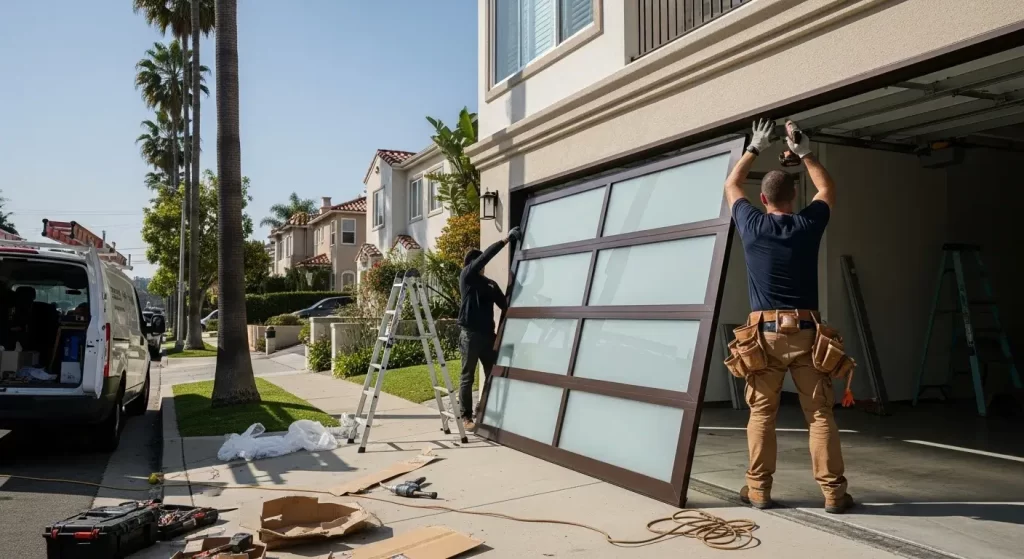
But nothing prepared me for the moment I stepped into a sprawling Beverly Hills property for a job that involved a fully custom, oversized, walnut-clad carriage door. The homeowner was particular, detail-oriented, and had a clear vision for how the final product should look and sound — not just operate. The stakes felt different. The expectations were on a level I had rarely encountered while working in Pacoima, California.
When we mounted the final panel and began our first test lift, I immediately felt something was wrong. The door rose smoothly, almost effortlessly, and one of my helpers even said, “Wow… that opener is strong.” But I knew it wasn’t the opener — it was the springs. Something felt too light. The smoothness was unnatural.
I disconnected the opener and performed a manual balance test. Sure enough, one of the torsion springs was providing more torque than its partner — not enough to cause immediate failure, but enough to create uneven load distribution. In Beverly Hills, where doors tend to be heavier and more customized, a subtle miscalibration like this burns out motors and warps panels over time.
That experience shaped everything that came after. Today, whenever I perform a garage door installation beverly hills project, I bring with me not just the technical experience, but also the instincts I developed working day after day in Pacoima, California, where imperfect structures forced me to master micro-adjustments most installers never learn.
Why Beverly Hills Installations Require Engineering-Level Precision
Architectural Complexity That Demands Customized Approaches
Houses in Beverly Hills are wildly different from the typical homes across Pacoima, California. Where Pacoima garages are straightforward and built with standard framing, Beverly Hills properties introduce unique challenges:
- Custom garage openings
- Reinforced or decorative headers
- Precision stucco finishes around the frame
- Tight clearance designs
- Multi-door systems on the same motorized rail
- Automated home integration requirements
In these homes, I often deal with:
- Non-standard rough openings that require tailored track spacing
- Tall or extra-wide doors that require specific spring pairings
- Structural variances that affect bracket placement
- Decorative façade panels that add hidden weight
- Thick insulated cores that change torque requirements
Every one of these details influences how the entire system should be engineered. A generic installation approach doesn’t work here — ever. That’s why a true garage door installation beverly hills project is never “standard.” It is a structural, mechanical, and architectural alignment exercise.
H3: Luxury Doors Carry Greater Loads — and Greater Risk if Installed Incorrectly
Doors in Beverly Hills are often:
- Solid wood
- Metal-reinforced glass
- Oversized double-width systems
- Heavily insulated
- Architecturally customized
A typical steel door you might see back in Pacoima, California might weigh 150 pounds.
Many Beverly Hills doors weigh anywhere from 300 to 500 pounds — sometimes more.
This dramatically changes:
- Spring torque calculations
- Shaft rigidity requirements
- Track pitch design
- Drum size selection
- Cable thickness and composition
A miscalculation of even a few pounds can result in:
- Opener strain
- Shaft deflection
- Panel bowing
- Track warping
- Accelerated wear
- Complete system failure
Homeowners rarely realize just how precise a heavy-door installation must be.
The Counterintuitive Principle That Most Homeowners Get Wrong
Nearly every client assumes the motor does the lifting.
But here’s the truth — and it surprises people every time:
The Opener Should Lift No More Than 8–10 Pounds of True Mechanical Load
If the opener is doing more than that, something is wrong.
This is where most installations — even by other professionals — fail.
A perfectly balanced door should:
- Lift easily with one hand
- Stay suspended when stopped halfway
- Glide smoothly without jerking
- Close with uniform resistance
If any of these conditions aren’t met, the opener will:
- Overheat
- Wear its gears prematurely
- Strain its belt or chain
- Produce excessive noise
- Lose travel calibration
This principle came from years of adjusting older, uneven doors in Pacoima, California, where balance issues were the norm. Bringing that expertise to garage door installation beverly hills projects has prevented more motor failures than I can count.
The Complete Technical Breakdown of a Perfect Installation — Part 1
Below is the first half of the engineering-level process I follow for installations.
This is not basic handyman work — this is a calibrated mechanical system that must be tuned like an instrument.
Step 1 — Structural Assessment of the Garage Environment
Before touching a single tool, I evaluate the entire structure.
This is something many installers skip, but it’s crucial.
Header Evaluation
I look for:
- Bowing
- Cracks
- Settlement issues
- Stucco detachment
- Weak framing behind the header
A compromised header leads to:
- Track misalignment
- Bracket failure
- Uneven door travel
This is far more common in older homes, especially in areas like Pacoima, California, where original framing sometimes hasn’t been touched in decades.
Side Jamb Integrity
Side supports must:
- Be perfectly vertical
- Be anchored into solid structural studs
- Have no internal rot
- Be free of offset
Beverly Hills homes often hide electrical or plumbing behind walls, so I must locate obstacles before mounting hardware.
Floor-Level Consistency
A garage floor in Beverly Hills might be decorative concrete.
A garage floor in Pacoima, California might be old slab with minor settling.
Both require:
- Laser leveling
- Bottom seal compensation
- Track-shimming strategies
Floor inconsistencies affect:
- Door weather sealing
- Closing pressures
- Panel alignment
Step 2 — Panel Installation with Micro-Level Calibration
A garage door isn’t simply “stacked.”
It is engineered one section at a time.
For each panel, I check:
- Horizontal level
- Lateral alignment
- Joint compression
- Hinge seat alignment
- Roller placement
- Panel squareness
Why Joint Compression Matters
If joints compress unevenly:
- Panels flex
- Hinges loosen
- The door bows over time
- Insulation density shifts
- Wind resistance decreases
This is where cheap installations fail within a year or two.
Step 3 — Track Installation with Precision Pitching
This stage separates true professionals from amateurs.
Standard Pitch Formula
Most installers follow the “¼ inch rise per foot” rule.
But luxury installations — especially a garage door installation beverly hills job — demand custom pitch values based on:
- Door weight
- Spring torque
- Opener horsepower
- Headroom space
- Door thickness
- Frame depth
I calculate modified pitch values and use:
- Digital inclinometers
- Laser levels
- Weighted plumb lines
Even a 1-degree error creates long-term mechanical stress.
Step 4 — Torsion Spring Engineering and Torque Calibration
This section is where 90% of installation quality lives — and dies.
I select springs based on:
- IPPT (inch-pounds per turn)
- Door weight and width
- Drum diameter
- Shaft diameter
- Lift type (standard, high-lift, vertical-lift)
The Torque Formula I Use
Required torque = (Door weight × radius) ÷ 2 springs
But luxury doors often require:
- Dual-spring systems
- Higher-cycle wire
- Double drums
- Reinforced center bearings
My experience in Pacoima, California repairing warped systems taught me to calculate compensatory torque adjustments — the kind necessary for Beverly Hills doors that have aesthetic overlays or glass panels.
The Quarter-Turn Precision Method
I tighten springs in ¼-turn increments, checking:
- Lift symmetry
- Midpoint balance
- Low-end descent speed
- High-end strain levels
No opener is ever connected until the door is perfectly balanced.
The Complete Technical Breakdown of a Perfect Installation — Part 2
Continuing from the deep engineering foundations in Part 1, this second half of the installation process focuses on fine-tuning, system integration, safety validation, and long-term performance calibration. This is the part most installers try to rush — but it’s where the real excellence of a garage door installation beverly hills project is defined.
Step 5 — Cable, Drum, and Shaft Calibration
The torsion system is only as good as its supporting components.
In Beverly Hills homes — where doors are heavier and often custom-built — cable and drum calibration becomes critically important.
Drum Alignment
I verify:
- Drum set-screw torque
- Drum-to-bearing spacing
- Cable seating position
- Vertical shaft alignment
- Shaft rotational freedom
If the drum isn’t perfectly aligned with the header bearing plate, it causes:
- Uneven lifting
- Cable pile-up
- Panel skewing
- Premature roller wear
- Sharp-click noises during ascent
In Pacoima, California, I learned to detect these micro-issues by sound, because many older homes had worn drums and warped shafts. Applying that sensitivity during garage door installation beverly hills projects allows me to fix problems long before the homeowner ever notices them.
Cable Tensioning
Both sides must carry identical load.
A difference of even 2–3 pounds creates:
- Tilt
- Lower corner drag
- Track stress
- Opener bracket fatigue
- Seal gaps allowing pests or drafts
I tension the cables using:
- Digital gauge measurements
- Manual tug testing
- Controlled lift assessments
- Multi-point balance checks
Precision here means everything for long-term reliability.
Step 6 — Opener Integration with Mechanical Harmony
Now that the mechanical system is tuned, the opener becomes the final piece of the equation — not the foundation of it. And this is another area where my experience in Pacoima, California sharpened my instincts. Many garages there were uneven, outdated, or structurally inconsistent, forcing me to learn how to integrate motors so they compensate instead of struggle.
Motor Mounting
I ensure:
- The rail is perfectly straight
- There is no sag between mounting points
- The header bracket spreads load evenly
- Mounting lag bolts penetrate structural material
- The arm length matches the door type
A common error in Beverly Hills installs is mounting into decorative framing without structural support — a mistake that becomes a catastrophe over time.
Force and Travel Calibration
I adjust:
- Upward travel limits
- Downward travel limits
- Down-force sensitivity
- Soft-start and soft-stop behavior
- Overcurrent protection
The opener should guide the door, not fight it.
If the force setting is wrong, the opener will mask deeper mechanical flaws instead of revealing them.
Smart Integration and Home Automation
Beverly Hills homeowners frequently use smart systems:
- Security automation
- Smartphone control
- Wi-Fi and cloud integration
- Home management platforms
- Sensor notifications
I verify:
- Signal strength consistency
- Router proximity
- Interference-free operation
- Proper pairing with home systems
This level of integration is rarely requested in Pacoima, California, but my background there gives me a grounded approach to troubleshooting unpredictable setups.
Step 7 — Multi-Stage Balance and Load Testing
Balance Testing at Three Levels
I test door balance at:
- 25% open
- 50% open (neutral point)
- 75% open
The door should:
- Hold position
- Not drift up
- Not fall down
- Move with uniform pressure
If a door fails this test, it is not ready — no matter how smooth it looks.
Lateral Pressure Testing
I check both sides for:
- Equal resistance
- No binding
- No roller shimmy
- No track scraping
Even a slight lean causes:
- Door wear
- Track friction
- Opener strain
- Uneven sealing
Acoustic Diagnostics
Years of work in Pacoima, California sharpened my ear.
I listen for:
- Spring echo
- Shaft vibration
- Roller rumble
- Low-frequency hum
- Door panel resonance
Sound reveals what your eyes cannot.
Step 8 — Sensor Alignment and Safety Verification
Safety is everything. A luxury installation must be as safe as it is beautiful.
Photo-Eye Alignment
I use:
- Laser alignment tools
- Reflective measurement grids
- Sensor height corrections
Misalignment of even ¼ inch can cause:
- False reversal
- Failure to close
- Intermittent behavior
- Sunlight interference
This is especially common in Beverly Hills garages with polished floors that reflect sunlight upward.
Auto-Reverse Testing
I test the auto-reverse using:
- Soft obstruction
- Weighted resistance
- Manual threshold pressure testing
The door should reverse instantly — not “after a delay” or once it decides it has sensed resistance. That delay can injure someone.
Step 9 — Structural Vibration and Stress Diagnostics
This is a step most installers never perform.
But luxury homes demand longevity, not just functionality.
I check:
- Header vibration transfer
- Wall resonance
- Bracket harmonic response
- Spring bar deflection
- Arm oscillation amplitude
These may sound overly technical, but here’s why they matter:
A door that vibrates today will crack tomorrow.
A bracket that resonates today will loosen tomorrow.
This is one of the reasons homeowners say the doors I install in Beverly Hills remain quiet for years — because the engineering behind them was precise from day one.
Step 10 — Final Homeowner Walkthrough
I always finish installations the same way — whether it’s a custom home in Beverly Hills or a family garage back in Pacoima, California.
I walk the homeowner through:
- How the counterbalance system works
- How to perform a monthly visual inspection
- How to operate the manual release
- How sensors respond to obstruction
- How to listen for early warning noises
- How to clean tracks properly
- What not to lubricate
- How to reset the opener if the power cuts
Garage doors are misunderstood machines, and helping homeowners understand them prevents problems later.
Why My Pacoima Background Makes Me One of the Most Detail-Oriented Installers in Beverly Hills
People sometimes assume that the luxury of a Beverly Hills environment creates the best professionals.
But the truth is the opposite.
My skill came from Pacoima, California, where:
- Garages are older
- Frames shift with age
- Doors are repaired more than replaced
- Systems are patched improperly
- Foundations settle unevenly
- Mechanical inconsistencies are common
Working in such real-world, imperfect conditions forced me to master:
- Micro-calibration
- Manual balancing
- Identifying structural weaknesses
- Correcting misaligned frames
- Re-engineering old support systems
- Fixing doors that “shouldn’t work” but must
When I take that skill set into a garage door installation beverly hills environment, I bring a level of mechanical intuition that simply cannot be learned from new-construction installations alone.
Final Thoughts — True Installation Isn’t Assembly, It’s Engineering
Across both Pacoima, California and Beverly Hills, one principle has guided every installation I’ve ever completed:
The visible beauty of a garage door depends entirely on the invisible precision behind it.
A perfect installation isn’t defined by how the door looks on day one — it’s defined by:
- How quietly it operates
- How long the opener lasts
- How rarely it needs adjustment
- How safely it functions
- How evenly it lifts
- How smoothly it glides
- How well it holds its balance over time
A truly professional garage door installation beverly hills project must feel effortless — not for me, but for the homeowner who uses it daily. And the only way to achieve that is through engineering-level attention, not quick assembly.
I bring into every installation the lessons learned from the demanding garages of Pacoima, California, blended with the refined expectations of Beverly Hills luxury. That combination — gritty experience meets high-end precision — is what makes the final result so reliable, so smooth, and so silent.In the end, a great garage door installation isn’t just a completed job.
It’s a mechanical symphony tuned so perfectly that the homeowner never has to think about it again.