
Why Garage Door Spring Replacement in Los Angeles Often Feels Sudden
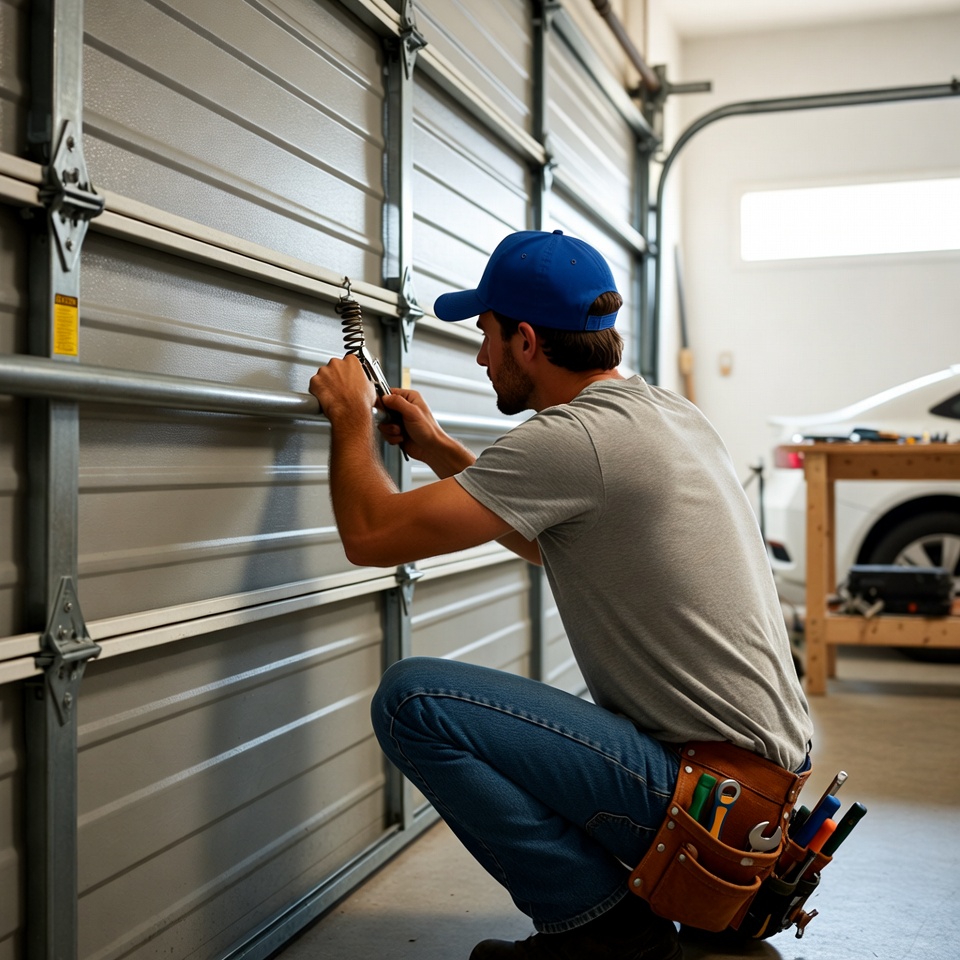
Garage Door Spring Replacement in Los Angeles Almost Never Starts the Day It Breaks
Most homeowners in Los Angeles call for garage door spring replacement on the worst possible morning.
The door won’t open.
The opener hums but nothing moves.
Someone is already late.
What almost no one realizes is that the spring didn’t fail that morning. It finished failing that morning.
After years of working on garage door systems across Los Angeles, I can say this clearly: spring failures feel sudden because the early warnings are quiet, gradual, and easy to ignore.
The Sentence I Hear Before Almost Every Spring Replacement
Nearly every garage door spring replacement call in Los Angeles starts with the same line:
“It was working fine yesterday.”
And in a narrow sense, that’s true. The door moved. The opener responded. Nothing snapped dramatically.
But garage door springs don’t measure health by whether the door moves. They measure it by how much effort is required to lift the door.
That difference is where the real story lives.
A Los Angeles Spring Failure That Explains the Pattern
There’s one garage door spring replacement call in Los Angeles that sticks with me because it followed the most common script imaginable.
The homeowner mentioned the door had felt “a little heavier” for a while. Not stuck. Not loud. Just heavier than it used to feel. They adapted. Lifted a bit faster. Trusted the opener more.
When the spring finally failed, it felt sudden. But when I inspected the system, the spring had been losing tension for months.
The door didn’t suddenly break.
It slowly ran out of margin.
That’s what most spring replacements in Los Angeles really are.
The Counter-Intuitive Truth About Garage Door Springs
Here’s something that surprises almost everyone:
Springs usually fail long before they snap
People picture spring failure as a dramatic break. In reality, springs weaken gradually.
As they fatigue:
- Lifting power drops
- The door feels heavier
- The opener compensates
- Other components absorb stress
The system adapts quietly until it can’t anymore.
That’s why garage door spring replacement in Los Angeles often feels urgent even though the problem has existed for a long time.
What Springs Actually Do (And Why They Matter So Much)
Springs don’t just help the opener. They do the heavy lifting.
A properly functioning spring system:
- Carries most of the door’s weight
- Keeps movement balanced
- Reduces strain on hardware
When springs weaken, everything else works harder to compensate.
Openers hide spring problems extremely well
Modern openers used throughout Los Angeles are powerful. They keep doors moving even when springs aren’t doing their job properly.
That strength hides early spring failure.
By the time the opener struggles, the spring has already lost a significant portion of its lifting ability.
Early Warning Signs Most Los Angeles Homeowners Miss
The warning signs of spring fatigue are subtle at first.
The door feels heavier than it used to
This is the most common early indicator. Homeowners often dismiss it because it happens gradually.
But a door doesn’t get heavier.
The spring gets weaker.
The opener sounds strained or louder
When springs lose efficiency, the opener picks up the slack.
A louder opener is often the sound of compensation, not power.
The door doesn’t stay halfway when lifted manually
A balanced door should stay in place when lifted halfway by hand.
If it drops or rises, the springs are no longer doing their job evenly.
Why Los Angeles Homes See These Failures So Often
Spring fatigue isn’t random. Certain conditions make it more likely.
Frequent daily use
Many Los Angeles households use their garage as a primary entrance. More cycles mean faster fatigue.
Every open and close counts toward spring wear.
Heavier modern doors
Modern garage doors are often heavier due to insulation, materials, and design.
Heavier doors demand more from springs, shortening their effective lifespan.
The Moment Springs Cross the Line
Spring failure isn’t dramatic until it’s complete.
Springs compensate until they can’t
As springs weaken:
- Cables pull unevenly
- Rollers experience extra stress
- Tracks absorb vibration
Eventually, the spring reaches a point where it can no longer store or release energy effectively.
That’s when the door stops lifting — and garage door spring replacement in Los Angeles suddenly becomes urgent.
Why the Timing Always Feels Terrible
Spring failures often happen:
- Early in the morning
- Late at night
- Right before work
That’s not bad luck. It’s physics.
Temperature changes expose weak springs
Springs are sensitive to temperature shifts. Small changes can affect tension just enough to expose fatigue.
A healthy spring handles it.
A weakened spring fails.
What Professionals Check Before Replacing Springs
When North Valley Garage Doors handles garage door spring replacement in Los Angeles, replacement is never treated as a single-part decision.
Balance is evaluated first
A spring replacement that doesn’t restore proper balance is a temporary fix.
Balance determines:
- How long new springs last
- How much strain other parts absorb
- Whether future issues develop quietly
Wear patterns reveal how long the issue existed
Cable alignment, roller wear, and track vibration show whether the spring problem developed recently or over time.
Those details matter for long-term reliability.
The Most Dangerous Assumption Homeowners Make
There’s one belief that turns manageable spring fatigue into emergency failure.
“If it still opens, it must be fine”
Movement does not equal health.
A door can open while:
- Springs are failing
- Stress is spreading
- Compensation is maxed out
When springs finally fail, it feels sudden only because the warnings were ignored.
Why Early Attention Changes Everything
When spring fatigue is addressed early:
- Replacement can be planned
- Damage stays isolated
- Emergencies are avoided
Waiting concentrates all that stress into one inconvenient moment.
What Actually Happens When Spring Fatigue Is Ignored
By the time garage door spring replacement in Los Angeles becomes unavoidable, the spring hasn’t just failed. The entire system has been operating under stress for far longer than most homeowners realize.
Springs are designed to absorb weight so everything else can work calmly. When they weaken, that calm disappears.
Springs don’t fail alone
A weakening spring forces other components to compensate:
- Cables pull harder and unevenly
- Rollers absorb friction instead of guiding movement
- Tracks experience vibration they weren’t designed to handle
The longer the spring is ignored, the more widespread the wear becomes.
This is why spring replacement often reveals additional stress elsewhere in the system.
Why Spring Failures Rarely Give Clear Warnings
One of the most frustrating things about garage door spring replacement in Los Angeles is how subtle the warning signs are.
The system adapts quietly
Garage doors are forgiving systems. They redistribute force without alerting the homeowner.
A slightly heavier door becomes normal.
A louder opener feels expected.
A brief hesitation fades into routine.
By the time the spring reaches its limit, homeowners have already adjusted their expectations without realizing it.
The Common Mistakes After a Spring Breaks
Once a spring finally fails, panic sets in. That panic leads to decisions that often make things worse.
Forcing the door to open
When a spring breaks, the door becomes extremely heavy. Trying to force it open manually or with the opener can:
- Damage the opener
- Pull cables off their drums
- Bend tracks
- Create alignment issues
What started as a spring issue can quickly turn into a multi-component problem.
Assuming replacement alone fixes everything
Replacing a spring without restoring balance doesn’t solve the underlying issue.
If balance isn’t corrected:
- New springs wear faster
- The door feels “off” again quickly
- Repeat failures become likely
That’s why proper spring replacement always focuses on the system, not just the spring.
Why Some Spring Replacements Don’t Last
Homeowners are often surprised when a newly replaced spring doesn’t feel right after a short time.
There’s usually a reason.
Incorrect tension distribution
Springs must be calibrated to the door’s exact weight and configuration.
Even small miscalculations lead to:
- Uneven lifting
- Extra stress on cables
- Premature fatigue
This is one of the most common reasons repeat spring issues happen.
Existing wear wasn’t addressed
If rollers, tracks, or cables are already worn, new springs inherit that stress immediately.
Without addressing existing wear patterns, spring replacement becomes a temporary reset instead of a long-term fix.
What Professional Spring Replacement Actually Looks Like
When North Valley Garage Doors handles garage door spring replacement in Los Angeles, the process is deliberate and methodical.
Balance comes first, not last
Before final adjustments, the door is tested manually.
A properly balanced door:
- Lifts smoothly by hand
- Stays in place halfway
- Moves evenly without drift
Balance ensures the new springs work within their intended range instead of compensating immediately.
The system is evaluated under load
Movement under load reveals whether:
- Rollers are rotating freely
- Tracks are guiding evenly
- Cables are sharing tension correctly
This step prevents hidden stress from shortening the life of new springs.
Why Los Angeles Homes Experience Spring Fatigue Faster
Spring wear isn’t just about age. Environment and usage matter.
High daily usage accelerates fatigue
In many Los Angeles homes, the garage door is the primary entry point.
More cycles mean:
- Faster metal fatigue
- Reduced recovery time for springs
- Shorter effective lifespan
Springs don’t rest between cycles. They accumulate wear.
Heavier doors demand more from springs
Insulated and modern-style doors common in Los Angeles are heavier than older designs.
That extra weight increases:
- Tension requirements
- Stress per cycle
- Fatigue rate
Heavier doors magnify the effects of even minor imbalance.
The Moment Homeowners Finally Understand the Problem
There’s a moment after proper spring replacement that almost every homeowner notices.
The door moves quietly.
The opener sounds calm again.
The door feels lighter than it has in years.
And the homeowner says:
“I didn’t realize how much harder it had gotten.”
That realization happens because gradual resistance becomes invisible over time.
When to Pay Attention Before Springs Fail Completely
Spring replacement doesn’t have to be an emergency.
Take action if you notice
- The door feels heavier when lifted manually
- The opener sounds strained or louder
- The door doesn’t stay halfway open
- Movement feels uneven or jerky
Those signs mean the spring is losing efficiency, not suddenly failing.
The Biggest Myth About Garage Door Spring Replacement
After years of working on garage doors across Los Angeles, one belief causes more emergencies than anything else.
“Springs only fail when they snap”
They don’t.
They weaken.
They compensate.
They fail quietly.
The snap is just the final moment — not the beginning of the problem.
Why Early Spring Attention Changes Everything
Addressing spring fatigue early:
- Prevents emergency failures
- Limits damage to other components
- Keeps replacement predictable
- Reduces long-term system stress
Waiting compresses all of that into one inconvenient breakdown.
A Final Perspective From the Field
After hundreds of garage door spring replacement jobs in Los Angeles, the pattern is always the same.
Sudden failures are almost never sudden
They’re the result of:
- Gradual fatigue
- Quiet compensation
- Missed warnings
Listening early keeps spring replacement calm and controlled. Ignoring the signs turns it into a stressful emergency.
About the Author
This article reflects real-world field experience from North Valley Garage Doors, serving homeowners across Los Angeles with a focus on system balance, long-term reliability, and preventing repeat failures rather than reacting to breakdowns.