
What I See Over and Over on Garage Door Repair Calls in Beverly Hills, CA
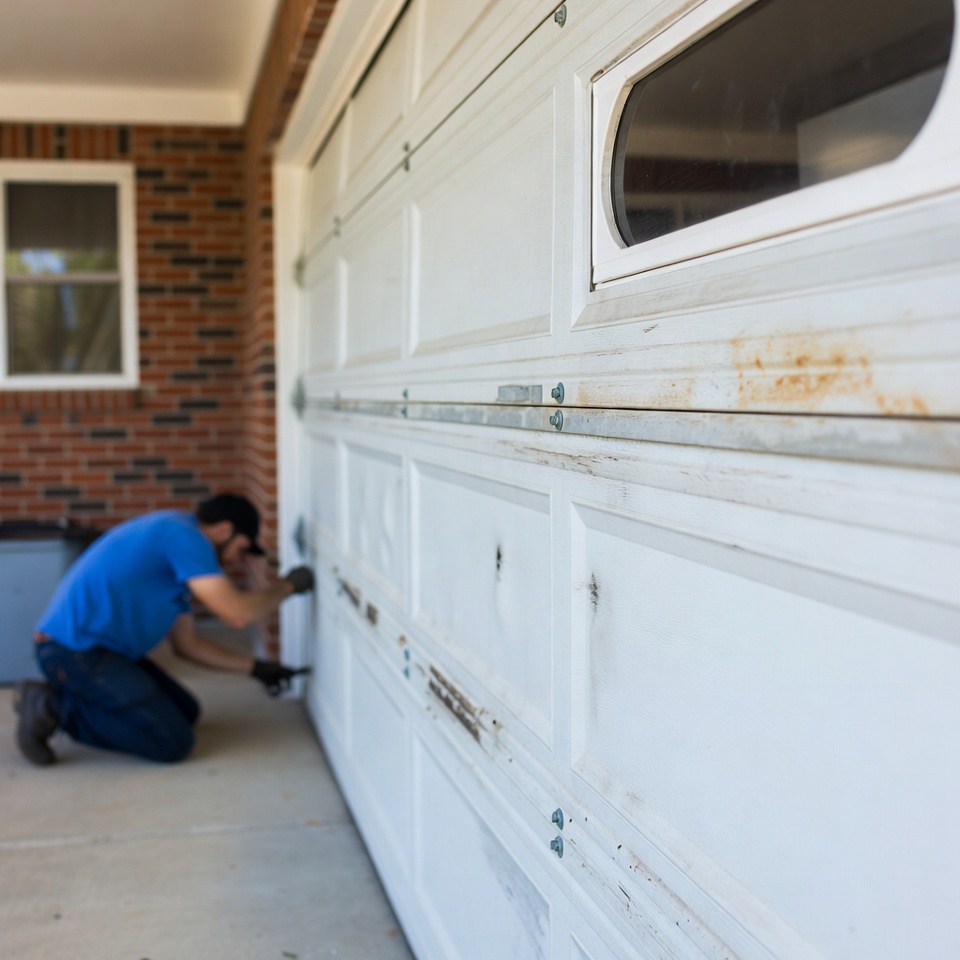
After Enough Calls, Patterns Stop Being Coincidences
After years of handling garage door repair calls in Beverly Hills, CA, certain patterns stop surprising you. Different homes, different doors, different homeowners — but the same underlying problems keep showing up.
Not because people are careless.
Not because the doors are poorly made.
But because garage doors fail quietly, and most people don’t notice the warning signs until the system has already been compensating for a long time.
By the time someone calls for help, the issue rarely started that day.
Most Beverly Hills Repair Calls Begin With the Same Sentence
Almost every call starts the same way:
“It was working fine yesterday.”
And in most cases, that’s true — at least on the surface.
The door opened.
The opener responded.
Nothing was obviously broken.
But garage doors don’t measure health by whether they move. They measure it by how much effort it takes to move. That difference is where most problems begin.
A Beverly Hills Repair Call That Explains Almost Everything
There’s one garage door repair call in Beverly Hills, CA I think about often because it followed the exact script I’ve seen dozens of times.
The homeowner mentioned a faint scraping sound that had been coming and going for a while. Not loud. Not constant. Easy to ignore. Life stayed busy, so the door stayed on the back burner.
When I arrived, the door still moved. But the moment I disconnected the opener and lifted it manually, the truth showed itself.
The door was heavier than it should have been. One side dragged slightly. Rollers weren’t spinning cleanly through part of the track. Springs were compensating unevenly.
Nothing had “suddenly” failed. The system had just reached the end of its margin.
That’s what most garage door repair calls in Beverly Hills actually are: systems that have been quietly struggling for months.
The Counter-Intuitive Truth About Garage Door Problems
Here’s something that surprises most homeowners:
The smoother a garage door feels, the easier it is to miss trouble
When a door fails dramatically, people react quickly. But when a door fails efficiently, problems hide.
Strong openers mask imbalance.
Heavy doors feel normal over time.
Gradual wear blends into routine.
That’s why some of the most serious issues I see start with doors that “still worked.”
What Fails First on Garage Door Repair Calls in Beverly Hills
Despite how different each home looks, the failures tend to follow a predictable order.
Rollers are usually the first to complain
Rollers work under constant load. When bearings dry out or flatten slightly, they stop rolling and start sliding.
Early signs include:
- Soft squeaks
- Brief scraping at the same spot
- Slight vibration during movement
Most homeowners ignore these sounds because the door keeps moving. But sliding rollers don’t just wear themselves out — they transfer stress into the track.
Track issues rarely start as track problems
Tracks don’t bend on their own. They get forced.
When rollers bind:
- Tracks vibrate
- Mounting hardware loosens
- Alignment drifts
By the time a track issue becomes visible, it’s often a secondary failure caused by something else that was ignored earlier.
Springs fail long before they snap
This is one of the biggest misunderstandings I encounter.
Springs don’t need to break to fail. They lose lifting efficiency gradually. As that happens:
- The door gets heavier
- The opener works harder
- Cables experience uneven tension
The system compensates — until it can’t anymore.
That’s why many garage door repair situations in Beverly Hills, CA involve doors that suddenly feel impossible to lift, even though the spring is still intact.
Why Problems Feel Sudden Even When They Aren’t
From a homeowner’s perspective, the failure feels abrupt.
From a mechanical perspective, it’s predictable.
Garage doors fail by accumulation, not surprise
Every time a door moves while out of balance:
- Springs work outside their ideal range
- Rollers grind instead of roll
- Tracks absorb vibration
Those forces stack quietly. When one component reaches its limit, the system no longer has a way to compensate.
That’s the moment people call for garage door repair in Beverly Hills.
Why Beverly Hills Homes Expose These Issues Faster
Garage doors in Beverly Hills, CA tend to be used frequently and consistently.
Frequent cycles accelerate wear
Multiple daily cycles mean:
- Small issues progress faster
- Wear becomes uneven sooner
- Compensation builds quickly
A door that might limp along elsewhere can reach failure earlier simply because it’s used more.
Strong openers hide mechanical stress
Many homes in Beverly Hills use powerful openers. That strength keeps doors moving even when balance is off.
The opener doesn’t fix the problem — it hides it.
By the time the opener can’t compensate anymore, several components are already stressed.
The Mistake That Turns Minor Issues Into Major Repairs
There’s one action that almost always makes things worse before help arrives.
Repeatedly pressing the opener button
When a door hesitates, people try again. And again.
Each attempt:
- Forces weak springs
- Grinds worn rollers
- Pushes misaligned tracks
By the time the repair happens, the damage has spread beyond the original issue.
What Professionals Look for Immediately on These Calls
When North Valley Garage Doors handles garage door repair calls in Beverly Hills, CA, the obvious failure is only the starting point.
Balance tells the real story
A healthy door:
- Lifts easily by hand
- Stays in place halfway
- Moves smoothly without strain
If balance is off, every other fix is temporary.
Wear patterns reveal how long the problem has existed
Uneven roller wear.
Cable drift.
Track vibration marks.
Those details show whether the issue developed recently or has been building quietly for months.
Why “It Still Works” Is the Most Dangerous Phrase
I hear this phrase on almost every repair call.
Movement does not equal health
A door can move while:
- Springs are failing
- Rollers are sliding
- Tracks are misaligned
Movement just means the system hasn’t run out of margin yet.
What Most Beverly Hills Homeowners Miss
Homeowners don’t ignore problems because they don’t care. They ignore them because the signals are subtle.
Gradual change feels normal
A door that gets slightly louder or heavier over time doesn’t trigger urgency. People adapt.
That adaptation is what allows small problems to become large ones.
Why Early Attention Changes Everything
When issues are addressed early:
- Repairs stay isolated
- Components last longer
- Emergencies are avoided
Waiting concentrates all that effort into one stressful moment.
What Actually Fails When Problems Are Ignored Too Long
By the time most homeowners in Beverly Hills, CA reach out for help, the garage door isn’t dealing with one clean failure. It’s dealing with fatigue.
That distinction matters.
Garage doors don’t usually break because one part suddenly gives up. They break because too many parts have been compensating for too long.
Systems don’t fail loudly at first
A garage door system is designed to absorb small issues. It redistributes load. It adapts. It compensates.
But every compensation creates stress somewhere else.
When small issues are ignored:
- Springs lift more than they should
- Rollers carry friction instead of motion
- Tracks absorb vibration instead of guiding
Eventually, something reaches its limit.
The Chain Reaction I See Most Often
After enough repair calls, the pattern becomes predictable.
Roller wear starts the cascade
Rollers are almost always the first component to show early wear.
When bearings dry out or flatten:
- Rollers stop rotating cleanly
- Friction increases at specific points
- Tracks begin to vibrate
That vibration loosens hardware and pulls alignment out of tolerance.
Track alignment becomes collateral damage
Tracks don’t cause problems on their own. They inherit them.
When rollers slide:
- Tracks take uneven pressure
- Mounting brackets loosen
- The door starts fighting its own path
By the time track issues are visible, they’re usually symptoms of something older.
Springs fail without ever snapping
This surprises almost everyone.
Springs don’t need to break to fail. They lose lifting efficiency gradually.
As that happens:
- The door feels heavier
- The opener strains
- Cables pull unevenly
The system keeps moving — until it doesn’t.
That’s why so many garage door repair calls in Beverly Hills, CA involve doors that suddenly won’t lift even though nothing looks “broken.”
Why Breakdowns Always Happen at the Worst Time
This is one of the most common frustrations homeowners express.
“Why did this happen today?”
There’s a mechanical reason.
Small environmental shifts expose weak systems
Garage doors are sensitive to small changes:
- Temperature shifts
- Metal contraction
- Changes in spring tension
A healthy system shrugs those off. A stressed one can’t.
That’s why failures often happen:
- Early in the morning
- Late at night
- Right when someone is in a hurry
The timing feels personal, but it’s physics.
Temporary Fixes That Make Things Worse
Once a problem becomes noticeable, the instinct is to make it go away quickly.
That’s where things often get worse.
Lubrication hides symptoms
Lubrication can quiet noise and smooth movement temporarily.
But it doesn’t:
- Restore balance
- Fix alignment
- Remove internal stress
The door feels better while continuing to wear underneath.
Increasing opener force accelerates damage
Turning up the opener force makes the door move again — briefly.
But it also:
- Forces weak springs to keep compensating
- Allows rollers to keep sliding
- Transfers stress into the opener
This is one of the fastest ways a minor issue becomes a major repair.
What Proper Garage Door Repair Actually Focuses On
Good repair work doesn’t start with the broken part. It starts with the system.
Balance is always the first checkpoint
A healthy garage door:
- Lifts easily by hand
- Stays in place halfway
- Moves smoothly without resistance
If balance is wrong, every other fix is temporary.
Movement tells the full story
Watching the door move under load reveals:
- Where resistance lives
- How tension is distributed
- Which parts are compensating
Noise points you in a direction. Movement confirms the cause.
How Repeat Repairs Are Created
Some homes seem to need garage door repair over and over again.
There’s a reason.
Fixing symptoms resets the clock, not the system
If only the obvious failure is addressed:
- The door works again
- The stress remains
- Wear continues
Weeks or months later, another component reaches its limit.
That’s how one repair turns into a pattern.
The Difference Between One-Time Repairs and Long-Term Fixes
After years of calls in Beverly Hills, the contrast is clear.
Long-term fixes restore system health
They:
- Correct balance
- Reduce friction
- Stop compensation
- Reset wear patterns
When the system is healthy, problems don’t return quietly.
Short-term fixes create future emergencies
They:
- Mask symptoms
- Allow stress to spread
- Push failure down the line
The homeowner feels relief — until the next breakdown.
What Homeowners Always Say After the Repair
There’s a moment that happens on almost every job.
The door moves smoothly.
The noise is gone.
The strain disappears.
And then the homeowner says:
“I didn’t realize how bad it had gotten.”
That realization comes from contrast. Resistance had become normal — until it wasn’t there anymore.
When to Act Before a Repair Becomes Urgent
You don’t need to panic at the first sound, but you do need to pay attention.
Don’t ignore it if
- A new noise appears
- The door hesitates
- Movement feels uneven
- The opener sounds louder
- The door feels heavier
Those aren’t quirks. They’re warnings.
The Biggest Myth Behind Garage Door Repair Calls
After years of seeing the same situations repeat, one belief causes more damage than anything else.
“Garage doors just break sometimes”
They don’t.
They warn first.
They compensate next.
They fail last.
Most garage door repair calls in Beverly Hills, CA happen at the very end of that process.
Why Early Attention Changes Everything
Addressing issues early:
- Keeps repairs simple
- Limits damage to one component
- Prevents emergency timing
- Reduces long-term stress on the system
Waiting does the opposite.
Final Thought — Patterns Don’t Lie
After enough garage door repair calls in Beverly Hills, the patterns are impossible to ignore.
Big failures almost always start small
A sound.
A hesitation.
A feeling that something isn’t quite right.
Those moments are the system asking for attention.
Listening early keeps problems small.
Ignoring them turns quiet warnings into loud breakdowns.